Thursday, August 21, 2025

What do airplane windows and ballpoint pens have in common?

Airplane Window by Heute

They both have a tiny hole on their side. Why? Well, pressure, of course.

If you’ve ever taken a window seat on an airplane you might have noticed that there is a tiny hole at the bottom of the window glass. Even though it is quite a small hole one can’t help but wonder what its purpose is. After all, if there is one thing you don’t want to see on a plane is a hole.

That hole, however, serves a very important purpose. As you might be aware, airplanes are pressurized to create a comfortable and safe environment for passengers and crew at high altitudes where air pressure and oxygen levels are too low for humans to survive. Otherwise, we would either freeze or pass out from the lack of oxygen. None of these options are ideal for passengers, let alone for the pilots and the rest of the crew.

However, the difference in air pressure between the outside and the inside of the aircraft creates tension between the glass panes of the aircraft’s windows and if left unchecked could cause the window to crack or even shatter. I cannot stress this enough, holes on an airplane are a big no-no.

The easiest way to fix this would be to not have windows at all. Unfortunately, that would make for a very unpleasant experience for the passengers and would also create a safety issue making it harder for passengers, crew, and potential rescuers to navigate their way in and out of an aircraft in case of a crash. This is where those tiny holes come in.

Called ‘bleed holes’ or ‘breather holes’ they are typically located in the middle layer of the three-layer aircraft window design, and their  purpose is to regulate pressure between the different glass panes and prevent fogging.

This hole allows the air pressure to equalize between the panes, stopping the outer glass from bearing the full brunt of the pressure changes as the airplane ascents and descends during flight, preventing it from shattering. By allowing air to circulate between the panes it also keeps moisture from accumulating and compromising visibility.

In case of an emergency landing, a regular window would most likely shatter due to the rapid changes in pressure as the plane quickly descends. This tiny hole prevents that from happening by keeping the window’s structural integrity even in the most extreme scenarios.

BIC Cristal Pen by Wikimedia Commons

Now that you have some grasp of why these holes are so important for an aircraft, you might be wondering why a ballpoint pen would also need one. After all, unless you are using it during an exam, it’s probably not going to find itself in many high pressure situations.

Although a regular ballpoint pen will probably not ever fly to a high altitude, there is still a difference in air pressure between the inside of the pen and the outside. The principle is the same as that of an airplane window. The small hole on its side is there to equalize the air pressure between the inside and the outside of the pen and to prevent the ink from leakage.

Ballpoint pens work by applying pressure to the tip of the pen which makes the ball rotate and the ink to come out through capillary action – the movement of a liquid within narrow spaces, such as a tube or a straw.

To put it simple, a liquid in a narrow tube like the one that a pen uses to store its ink will always be drawn upwards unless there’s a force preventing it.

This way, by keeping the pressure equalized, the hole on the side of the pen keeps the ink from leaking while the pen is not being used.

Bad habits die hard

It’s not just the pen itself that has a hole in it. The pen cap also has a hole on its top. This however has nothing to do with pressure but it does have to do with air, particularly with breathing.

Even if you don’t do it yourself you probably have at least one friend who likes to nibble on pen caps. You know. The one you never asked to borrow a pen from because they always looked gross and chewed on.

Because of your friend and of millions of other people like them, pen caps have a hole at the top so that if they ever happen to swallow and choke on it, the cap will not stop them from breathing, by allowing the air to pass through its top.

It’s literally a safety issue that prevents people with bad chewing habits from dying in a horrible manner. 

Thursday, August 14, 2025

Aviatyrannis: Portugal’s very own Tyrannosaur… Maybe

Aviatyrannis, an illustration by Johan Egerkrans

Found in rocks dating back to the Late Jurassic period, this small theropod dinosaur might be the grandmother of the famous T. rex. However, new research is putting its classification into question.

Aviatyrannis was discovered by German paleontologist Oliver Rauhut in the year 2000 in Guimarota, a lignite coal mine in the district of Leiria, Portugal.

It was described in a paper published in 2003, and given the name Aviatyrannis jurassica, which aptly translates to ‘the tyrant's grandmother from the Jurassic’. It was a small theropod dinosaur, a term used to describe mostly meat eating predators like T. rex, Allosaurus, or Velociraptor, but also some dinosaurs with a more generalist diet like Gallimimus, Ornithomimus, or Deinocheirus, and even a branch of herbivores with long sharp claws like Therizinosaurus, one of the most recent additions to the cast of the Jurassic World franchise.

With an estimated length of 1 meter (3.3 ft) and a body mass of 4 kg (8.8 lb) it wouldn’t be much larger than a medium size dog. However, Rauhut believes that the holotype specimen he described was only a juvenile, meaning Aviatyrannis could potentially reach a larger size.

A holotype is a single type specimen upon which the description and name of a new species is based. In this case, Aviatyrannis’ holotype is named IPFUB Gui Th 1 and consists of an ilium, the bone that makes up the upper portion of the hip bone and pelvis, only ninety millimeters long (3.54 inches).

Oliver Rauhut also referred two other bones to this species, a partial right ilium, and a right ischium, another hip bone, that belonged to slightly larger individuals, along with sixteen isolated teeth.

Found in the Alcobaça Formation, a geological formation that dates back to about 155 million years ago, this would put Aviatyrannis as one of the oldest tyrannosaurs ever found. Currently, the oldest known ancestor of the mighty T. rex is Proceratosaurus, a three meter (9.8 ft) long dinosaur found in the UK, that lived about 166 million years ago.

However, a 2023 paper by a group of Japanese researchers led by Soki Hattori had a closer look at Aviatyrannis’ holotype and reclassified it as an ornithomimosaur.

This team of paleontologists noted that this dinosaur’s ilium was strikingly similar to that of the recently described Tyrannomimus, a deinocheirid. Even though a more detailed study is needed, the authors argue that Aviatyrannis could be the earliest known ornithomimosaur and even possibly the earliest known deinocheirid.

Although not close as famous as Tyrannosaurs, Deinocheirids were a particular family of theropod dinosaurs. The most well-known was Deinocheirus, an unusual looking dinosaur that could grow to be 11 meters (36 ft) long, and weighing 6.5 metric tons (7.2 short tons).

If you’re familiar with the documentary series Prehistoric Planet, Deinocheirus makes an appearance in one episode, bathing in a swamp and, well, relieving himself to put it kindly.

Deinocheirus as portrayed in Apple TV’s Prehistoric Planet Episode ‘Freshwater’

It might not be as glamorous, but being the earliest known deinocheirid is in and of itself an interesting feat for such a small dinosaur found in the most unlikely of places.

Living among Giants

155 million years ago, during the Late Jurassic period, the region now known as Portugal was a lot different than it is today. Portugal was part of the northern margin of the supercontinent Laurasia, near the Tethys Ocean that would later become the Atlantic.

It had a warm tropical to subtropical climate with lush forests and shallow seas covering coastal areas.

Aviatyrannis lived alongside large meat eating dinosaurs like Allosaurus, and Ceratosaurus, giant sauropods like Lusotitan, Dinheirosaurus, and Lourinhasaurus, and even the thagomizer wielding Stegosaurus.  

It shared its environment with various species of fish, amphibians, turtles, lizards, and mammals. In the skies it would not be uncommon to spot the occasional pterosaur, like Rhamphorhynchus.

Much is yet to be known about Aviatyrannis but regardless of where it fell in the dinosaur family tree it already earned its place as one of the most intriguing creatures of Jurassic Portugal.

Thursday, August 07, 2025

Perovskite Solar Cells are ushering in a new age in sustainable energy

A field of solar panels by Michael Pointner

It might still be too early to tell, but this new technology is giving silicon solar cells a run for their money.

In 2025 the highest certified efficiency for a single-junction perovskite solar cell is 26.7%. To put this into perspective, a regular solar cell has an efficiency rate between 15 and 22%.This may not seem like much but it’s enough to put a significant dent in your energy bill.

As solar panels have become cheaper more and more countries, companies, and individuals are looking at solar power as a sustainable and accessible energy solution. It’s even likely that you or someone you know has already installed a couple of solar panels on their roof.

However, not all solar panels are the same, and in recent years, perovskite solar panels have gained a lot of momentum for their remarkable efficiency, low production costs, and versatility. 

While a typical residential solar power set up can produce somewhere between 20 and 25 kwh of energy on a clear summer day, the same set up using perovskite solar panels can produce about 37.5 kwh. This amounts to a 50% increase in energy output, enough to power a single family home for a little over a day.

In this article, we will dive into the science behind perovskite solar panels, their advantages, challenges, and the potential they hold for revolutionizing the future of solar energy.

What is Perovskite?

Perovskite can actually mean two things: a mineral and a crystal structure. The mineral perovskite, also known as calcium titanium oxide (a bit of a mouthful), was discovered in the Ural Mountains in Russia, by Gustav Rose, a German mineralogist, in 1839.

However, the thing that made perovskite stand out wasn’t the mineral itself but its crystal and chemical structure. Here’s a quick chemistry lesson: The general chemical formula for perovskite materials is ABX₃, where 'A' and 'B' are cations of different sizes, and 'X' is an anion that bonds to both cations.

Even though perovskite itself is a very common mineral found in nature, perovskite solar panels don’t use it. Instead they rely on hybrid organic-inorganic lead or tin halide based compounds such as Methylammonium Lead Iodide (MAPbI3) and Formamidinium Lead Iodide (FAPbI3).

These materials have unique optoelectronic properties that make them highly efficient at converting sunlight into electricity.

What makes perovskite solar panels so efficient?

The working principle behind perovskite solar panels is similar to that of other photovoltaic technologies. When sunlight strikes the perovskite layer, it excites electrons, creating electron-hole pairs. These are then separated and collected at the electrodes, generating an electric current. The efficiency of this process is influenced by the quality of the perovskite material, the architecture of the solar cell, and how different layers interact between them.

So, basically, when we talk about efficiency in solar panels, we are referring to their ability to convert sunlight into electricity. Perovskite materials excel in this regard due to their high absorption coefficient, which means they can absorb a significant amount of sunlight even in thin layers. This allows perovskite solar panels to be much thinner and lighter than traditional silicon-based solar panels.

Which means you can have a more efficient solar panel, with lower production costs, that can not only be used on rooftops, but also in windows, balconies, cars and other vehicles, and also in small or even wearable devices.

Imagine having a small solar powered lightweight energy unit that you can take with you when you go camping to power your devices. This technology could also be used to power remote or impoverished areas with no access to the energy grid, by a fraction of the cost of a regular solar panel.

But this isn’t all that a perovskite solar panel can do. Perovskite materials can also be easily tuned by varying their chemical composition, this means you can optimize these materials for different light conditions and applications. For instance, you can design perovskite solar panels to absorb a broader range of the light spectrum to increase their overall energy efficiency.

You can also combine perovskite solar cells with other photovoltaic materials, such as silicon, to create a tandem solar cell. These tandem cells can achieve higher efficiencies by capturing a wider range of the light spectrum.

Perovskite-silicon tandem cells have already demonstrated efficiencies well above 29%, surpassing the theoretical limit of single-junction silicon solar cells.

What about any downsides?

You may, however, be asking yourself, if perovskite solar panels are so great, why aren’t they being rolled out everywhere.

Well, in spite of their many advantages, perovskite solar panels still face several challenges that need to be addressed before they can be widely adopted.

One of the main concerns with perovskite solar panels is their long-term stability. Perovskite materials are sensitive to environmental factors such as moisture, oxygen, and UV light, which can degrade their performance over time. Researchers are actively working on developing more stable perovskite formulations and encapsulation techniques to protect the cells from these issues.

Another problem is that most perovskite materials contain lead, which we all know can be toxic. However, while the amount of lead used in perovskite solar panels is relatively small, it might still have an impact on public health and the environment, if they’re not properly disposed of and or recycled. To resolve this issue, efforts are underway to develop lead-free perovskite materials, such as those based on tin or other non-toxic elements.

Since this is a new technology, most of the data we have on its performance has come from testing in controlled laboratory settings. This means that scaling up perovskite solar panels for commercial use might not yet be viable. Issues such as uniformity, reproducibility, and the development of large-scale manufacturing processes need to be addressed to ensure consistent performance and reliability.

Perovskite solar cells have also reported efficiency losses associated with charge recombination, interface defects, and other factors that require more research to mitigate these issues and to improve their overall performance.

As we confront the pressing challenges of climate change and energy sustainability, perovskite solar cells emerge as a beacon of hope. Their unique properties and advantages could help unlock a new era of renewable energy, making solar power more efficient, accessible, and versatile than ever before.

As researchers continue to innovate and perfect this technology, we may soon find ourselves living in a world where access to clean, renewable energy is not just a long-term goal but a daily reality thanks, in part, to the remarkable capabilities of perovskite materials.

Sunday, July 31, 2022

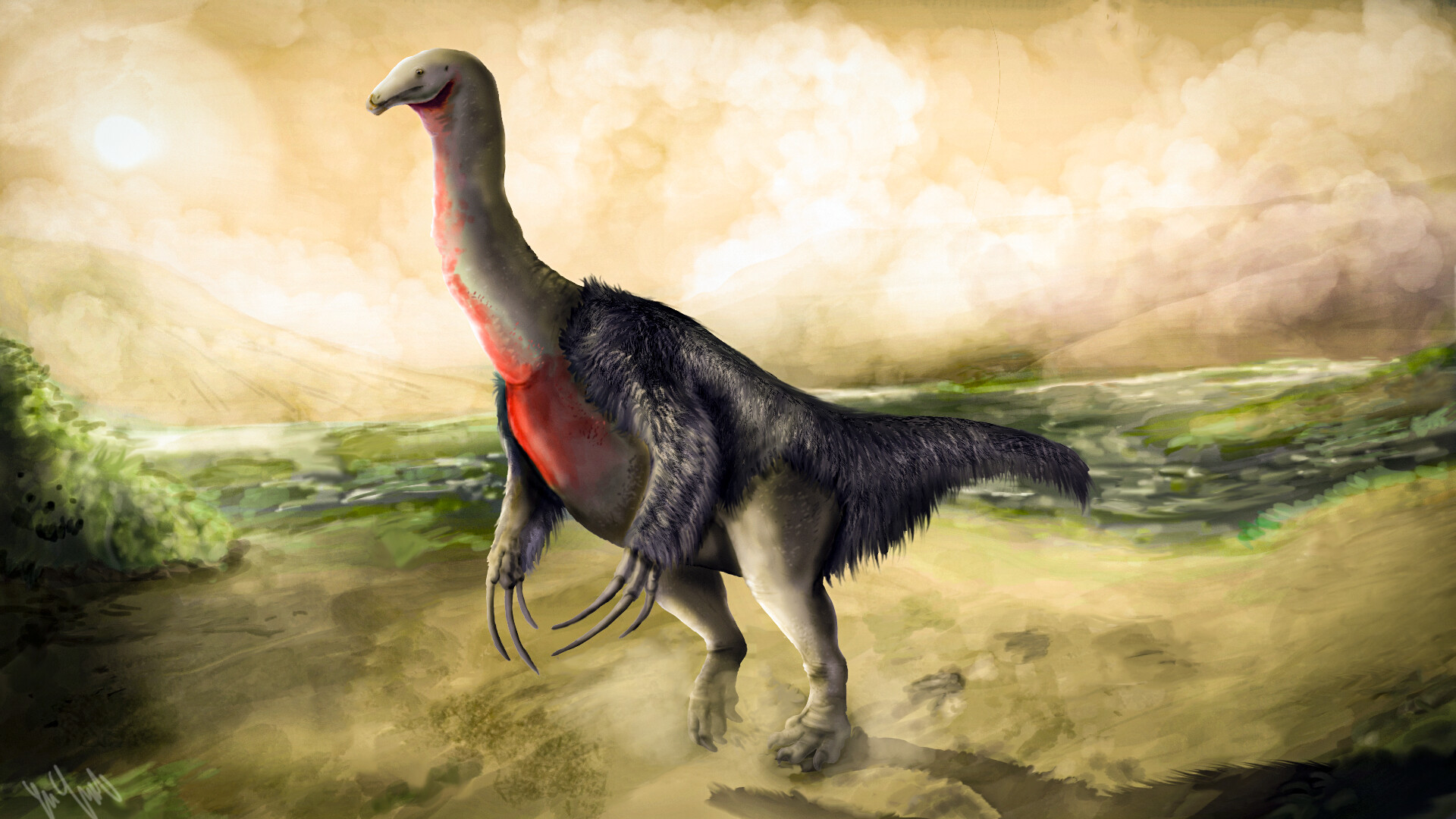
Therizinosaurus: The Panda bear of the Cretaceous

Therizinosaurus by Ivan Iofrida

With long arms and sharp claws, Therizinosaurus has almost all the character traits of a predator, however, this dinosaur was an herbivore.

Therizinosaurus is a theropod, the dinosaur family that includes T. rex, Allosaurus, dromeosaurs, and even birds. But unlike most of its non-avian cousins, Therizinosaurus evolved to have a mostly plant-based diet.

A lot like panda bears, which have traded a predator lifestyle for bamboo leaves while retaining most of the characteristics that make them part of the bear family, Therizinosaurus kept a set of strong arms ending in very long and sharp claws.

This made this dinosaur one of the most bizarre and also one of the most capable of defending itself against a predator. Bumping into a Therizinosaurus in the middle of a dark forest would most likely be as terrifying as stumbling into a T. rex’s nest.

No longer a turtle

Therizinosaurus fossils were first found in 1948 by a team of soviet paleontologists exploring the Nemegt Formation of the Gobi Desert in Mongolia.  

This expedition found a great deal of dinosaur and turtle fossil remains, but the most noteworthy find was three sizeable incomplete claw bones in combination with other objects including a metacarpal fragment and multiple rib pieces in close proximity to a big theropod's skeleton.

The fossils were given the specimen number PIN 551-483 and later used as the basis for the new genus and type species Therizinosaurus cheloniformis, which became the holotype specimen, described by the Russian paleontologist Evgeny Maleev in 1954.

The name Therizinosaurus, which refers to this animal’s enormous claws, is derived from the Greek words therzo, which means scythe, reap, or cut, and sauros, which means lizard. The specific name cheloniformis, which refers to the remains, is derived from the Greek word chelóni, which means turtle, and the Latin formis, since the remains were thought to belong to a turtle-like reptile.

However, in 1970 another Russian paleontologist named Anatoly K. Rozhdestvensky, had a better look into these fossils and suggested that Therizinosaurus was in fact a theropod dinosaur and not a turtle, by comparing its claw bones with those of other meat-eating dinosaurs.

New fossil findings of this animal and of other species closely related to Therizinosaurus, like Segnosaurus and Nothronychus, further supported this claim, making this dinosaur the first of a new family called Therizinosauridae.

A not-so-gentle giant


Mounted forelimbs of specimen MPC-D 100/15 at Nagoya City Science Museum

Although new fossil remains have been found, Therizinosaurus is to this day one of the most incomplete members of this group. The most complete remains only include bones of its forelimbs, claws, some ribs, and its hindlimbs, and we have yet to find its skull.

Taking this data into account, and looking at other members of this group, paleontologists have managed to determine that Therizinosaurus would have reached 9 to 10 meters (30 to 33 ft) in length with an estimated height of 4 to 5 meters (13 to 16 ft) and a weight from 3 to 5 metric tons (3.3 to 5.5 short tons).

But one of the most fascinating things about this animal was its diet. In 1993, Canadian paleontologists Dale and Donald Russell compared Therizinosaurus and Chalicotherium, an extinct large ungulate mammal known for walking on its knuckles. This team identified some similarities in both animals’ body plans.

Both Therizinosaurus and Chalicotherium had large, well-developed, and relatively strong arms, a robust pelvic girdle suited for a sitting behavior, and robust and shortened hindlimbs.

Dale and Donald considered these adaptations to represent an example of convergent evolution, which happens when different organisms evolve similar traits without being related. An example of this is sharks, dolphins, and ichthyosaurs, evolving a very similar body plan in spite of being separated by hundreds of millions of years of evolution, and belonging to different clades.

Since animals with this type of body plan are known to represent herbivores, the authors suggested this lifestyle for Therizinosaurus. Dale and Donald Russell reconstructed the feeding behavior of Therizinosaurus as being able to sit while consuming foliage from large shrubs and trees, using its arms to pull the branches towards itself, and its long neck to feed on the leaves without having to stand.

When browsing in a bipedal stance, Therizinosaurus may have been able to reach even higher vegetation supported by its short and robust feet. Whereas Chalicotherium was more suited to hook branches, Therizinosaurus was better at pushing large clumps of foliage because of its long claws.

In 2018, paleontologist Anthony R. Fiorillo suggested that Therizinosaurus had a reduced bite force that may have been useful for cropping vegetation or foraging. This hypothesis was suggested based on an analysis of other therizinosaurids such as Erlikosaurus and Segnosaurus.

A Jurassic star is born


Claire Dearing (Bryce Dallas Howard) is being chased by a Therizinosaurus in Jurassic World Dominion

Therizinosaurus has recently risen to fame, being one of the new dinosaur stars of Jurassic World Dominion. But how accurate was this dinosaur’s depiction in the new movie?

Although the fossil remains of Therizinosaurus are relatively incomplete, its physical characteristics can be inferred through more complete and related therizinosaurids.

Paleontologists believe that like other members of its family, Therizinosaurus had a proportionally small skull bearing a horny beak atop its long neck, a bipedal gait, a large belly to process its plant-based diet, and it was most likely covered in feathers.

Jurassic World Dominion’s interpretation of this animal is inspired by most of these traits.

It’s a bit larger than the real animal, having 12 meters (40 ft) in length and 6 meters (20 ft) in height, which is not unusual for this franchise.

This animal was in fact covered in feathers and it’s not unlikely that it might have acted aggressively towards an unknown threat.

Where Jurassic World Dominion seems to have dropped the ball is with this dinosaur’s head sculpt. The beak is too birdlike and its snout is too short, but overall it is one of the most accurate dinosaur designs in the latest installment of this franchise.

Being a theropod, Therizinosaurus most likely would have had acute eyesight, a trait that this animal would’ve needed to detect predators and other threats and to find food and other members of its species.

In this movie this dinosaur is portrayed as being blind, however, this seems to be due to an incident that happened off-screen involving that particular animal, and not a characteristic common to all in-world Therizinosaurus.

Therizinosaurus was an odd and fascinating dinosaur that questioned our understanding of theropod evolution. Its discovery opened up a new wave of research for paleontologists and other scientists interested in the ecology of this long-lost world.   

Sunday, July 17, 2022

Quetzalcoatlus: A pterosaur as tall as a giraffe that hunted dinosaurs

Mark Witton and Darren Naish (2008)

Were these flying reptiles really as big as an airplane? How did such a large animal conquer the skies?

Imagine a stork the size of a giraffe hunting dinosaurs. This may sound like something from the pages of a science fiction novel, but it’s not. From 108 to 66 million years ago the skies of the Cretaceous were dominated by a group of giant flying reptiles called Azhdarchids, and one of the biggest known members of this family was Quetzalcoatlus.

Discovered in 1971 in Texas by a geology grad student named Douglas A. Lawson, this giant pterosaur was named after Quetzalcoatl, the Aztec feathered serpent god. With a wing span of 11 meters (36 ft) and a height estimate of 5,5 meters (18 ft), this was one of the biggest animals to have ever flown. It was as tall as a giraffe with a wing span similar to that of a Cessna 172 aircraft.

Although it was a big animal more recent weight estimates put it at around 200 to 250 kg (440 to 550 lb), making it somewhat of a lightweight, which would be perfect for flying.

Scientists are still discussing whether or not Quetzalcoatlus was able of long-range extended flight, with some studies even arguing that large azhdarchids only would have flown occasionally and for short distances. The debate is still going on, although the consensus seems to be leaning more to the idea that Quetzalcoatlus would be able to fly for long distances and perhaps even across continents.

Quetzalcoatlus lived in North America right at the end of the Cretaceous, sharing its environment with large long-necked titanosaurs like Alamosaurus, the oviraptorosaur Ojoraptorsaurus, the hadrosaurid Kritosaurus, the armored nodosaur Glyptodontopelta, ceratopsids like Torosaurus, Bravoceratops, and Ojoceratops, and even some yet to be described members of the Tyrannosaur family.

In fact, Alamosaurus was so common in this environment that paleontologists believe Quetzalcoatlus might have hunted hatchlings and even juveniles of this species of long-necked dinosaurs.

Like other pterosaurs, Quetzalcoatlus was covered in pycnofibers, short and simple structures similar to feathers that would have covered its body with fuzz. Its skull was bout 2,5 meters long (8.2 ft), it had a very sharp and pointed beak, as well as a head crest, the size of which is still unknown.

How accurate was the Quetzalcoatlus in Jurassic World Dominion?

Quetzalcoatlus has featured in some of the most popular works of paleo media, such as Walking With Dinosaurs, Prehistoric Planet, and Jurassic World Dominion. In the latest installment of the Jurassic World franchise, we see this giant pterosaur attack and crash an airplane, stranding Owen Grady, Claire Dearing, and Kayla Watts in the BioSyn dinosaur sanctuary.

As is often common with the prehistoric animals represented in Jurassic World, this Quetzalcoatlus was just way too big. In the movie, this animal had a wingspan of about 21 meters (50 ft), making it almost double the size of its real-life counterpart. This size estimate was actually at one point suggested, however, more recent research has put this animal’s max wing span at about 11 meters (36 ft).

Although birds have been known to shut airplane engines down after flying into them, it’s highly unlikely that an attack from a Quetzalcoatlus from above would be strong enough to crash a plane. If this pterosaur had flown into one or two of the propellers, it would have made for a more plausible scene, granted with a considerably lower dramatic effect.

Other than that, its depiction is fairly accurate, especially if we take into consideration the scene in Jurassic World Dominion’s prologue where we are first introduced to this giant azhdarchid. The way it moved on the ground, the size and shape of its beak and head crest, and even the pycnofibers covering its body, make it one of the most accurate designs in this film.

Pterosaurs vs. Dinosaurs

One common mistake in popular media is pairing pterosaurs and dinosaurs together as belonging to the same family. Although dinosaurs and pterosaurs are both archosaurs and probably shared an ancestor, both lineages diverged from each other at the beginning of the Triassic.

Pterosaurs were a very diverse family, from the small Nemicolopterus, with a wing span of only 25 centimeters (10 inches), to the weird short-tailed Anurognathus, and from the beautifully crested Tapejara from Brazil, to the famous Pteranodon. These animals were the first vertebrates to conquer the skies, first evolving 228 million years ago in the Late Triassic, and becoming extinct along with the non-avian dinosaurs, 66 million years ago.

Azhdarchids were late arrivals to this evolutionary story, but their size and their range across prehistoric Earth made them one of the most successful families of pterosaurs.

Saturday, July 09, 2022

Giganotosaurus: Was this the apex predator of its time?

Gigantosaurus in Jurassic World Dominion

Was Giganotosaurus the biggest carnivore that the World has ever seen? And how would it compare to a T. rex?

The main dinosaur antagonist in Jurassic World Dominion, Giganotosaurus, was marketed throughout the movie as the biggest carnivore that the World has ever seen. A claim that was given strength by this franchise's main paleontologist, and fan favourite, Dr. Alan Grant.

Giganotosaurus was first featured in Jurassic World Dominion's prologue, a short film released in theatres as an IMAX-exclusive before the showing of Fast 9. In this prologue, we travel back to the late cretaceous of North America, 66 million years ago, where we see several dinosaurs in their natural environment, like Dreadnoughtus, Nasutoceratops, and Oviraptor, and where we are first introduced to the giant azhdarchid Quetzalcoatlus.

At the end of this prehistoric journey, we witness a fight between a Giganotosaurus and a feathered T. rex. The Giganotosaurus manages to beat the tyrant lizard king, leaving it to die at the base of a river. We then see a mosquito biting the fallen T. rex and are brought back to our World, where the T. rex from the original Jurassic Park is being chased by a helicopter after escaping from Lockwood Manor. Giving us a hint that this animal was cloned from the DNA extracted by the same mosquito that bit the fallen T. rex, 66 million years ago.

There are many issues with this short film but the main one is that Giganotosaurus and T. rex would have never met. Giganotosaurus, whose name means giant southern lizard, lived during the Late Cretaceous, approximately 99,6 to 97 million years ago, while Tyrannosaurus rex lived from 68 to 66 million years ago. This means both animals were separated by more than 30 million years.

If time wasn't enough, both animals lived on opposite sides of the globe. While T. rex lived in North America, Giganotosaurus fossils have been discovered in the Candeleros Formation of Patagonia, in Argentina. Two continents that, at the time, were separated by a large ocean, meaning that even if both animals had lived at the same time, the likelihood of them ever meeting would be very low.

Giganotosaurus vs. T. rex


Giganotosaurus vs. T. rex in Jurassic World Dominion

Although the first T. rex fossils were found in 1874 by Arthur Lakes near Golden, Colorado, we would have to wait 30 more years for Henry Fairfield Osborn, president of the American Museum of Natural History, to in 1905 give this animal the name that would catapult it to stardom.

But, how big was a T. rex? One of the largest and the most complete specimens was Sue (FMNH PR2081), which can currently be seen at the Field Museum of Natural History, in Chicago. Sue measures about 12,4 meters in length (40.7 ft), 3,96 meters (13 ft) in height, and has been estimated to have a mass of about 8,4 metric tons (9.3 short tons).

However, the title of biggest T. rex ever found belongs to a specimen nicknamed Scotty (RSM P2523.8), located at the Royal Saskatchewan Museum. Scotty is reported to measure about 13 meters (43 ft) in length, with an estimated mass of 8,87 metric tons (9.78 short tons).

Discovered by Rubén D. Carolini in 1993, Giganotosaurus was one of the largest known terrestrial carnivores, however, its exact size has been hard to determine due to the fact that paleontologists have yet to find a complete specimen.

The skeleton of Giganotosaurus holotype specimen (MUCPv-Ch1) was about 70% complete and included the skull, pelvis, leg bones, and most of the backbone. A holotype is a single physical example of an organism, living or extinct, known to have been used when the species was first formally described.

Scientists estimate that MUCPv-Ch1 measured about 12,5 meters (41 ft) in length, with a body mass of 6,6 metric tons (7.3 short tons). However, a second specimen (MUCPv-95) has also been discovered. Although this specimen's remains are more fragmentary than the holotype's, it is estimated that this individual was about 13,2 meters (43.3 ft) long, with a mass between 7 and 8 metric tons (7.7 and 8.8 short tons).

Giganotosaurus also had one of the longest known skulls for a theropod dinosaur, with the holotype's skull estimated at 1,80 meters (5.8 ft) and the second specimen's estimated at 1,95 meters (6.3 ft). The largest known T. rex skull measures about 1,52 meters (5 ft) in length.

This means that Giganotosaurus would surpass T. rex in length by less than half a meter, however T. rex would've been a more massive animal, weighing almost one metric ton more than Giganotosaurus.

In fact, Spinosaurus would probably be a better contender for the title of biggest carnivore the World has ever seen, with a skull 1,75 meters (6 ft) long, a length of 14 meters (46 ft), and an estimated mass of 7,4 metric tons (8.2 short tons).

However, with Spinosaurus evolving to adapt to a semiaquatic lifestyle, its jaws were better equipped to hunt fish rather than fight off large theropods, dropping Jurassic Park III's main star to last place.

But when it comes to T. rex and Giganotosaurus, their size would put both animals as the apex predators of their own ecosystems.

As for who would win in a fight? My money is on our not-so-friendly neighbourhood tyrant lizard king.

Saturday, July 02, 2022

We need to talk about the locusts

Jurassic World Dominion Locust Animatronic, Image Source: DR

One of the main and most controversial plot points in Jurassic World Dominion is the use of genetically modified locusts with ancient DNA to ravage crops that were not planted using seeds sold by Biosyn, a genetics company, and the main antagonist of the movie.

Lewis Dodgson, the head of Biosyn, had the idea to use these locusts to destroy the competition and ensure that farmers only bought seeds sold by his company. However, things don’t go according to plan and the genetically modified locusts get out of control and start ravaging crops all across North America.

The remainder of the film then revolves around finding a solution to end this plague of biblical proportions before it manages to consume the World’s food supply.

So, are these locusts based on any real extinct species? Can we genetically modify insects? And does the solution cooked up by Dr. Henry Wu have any real World science to back it up?

How to become a fossil in four easy steps

Insects, and invertebrates in general, have a very incomplete fossil record, filled with gaps at times spanning hundreds of millions of years. In fact, we are lucky that some species have managed to fossilize at all.

This happens because insects are small and their bodies are too fragile to be preserved as fossils. However, insects do have a tough external skeleton that, under the right conditions, can be preserved as fossils.

The process of fossilization requires a very specific set of steps and conditions that actually makes it rare for an animal, regardless of its size, to fossilize. First, we need the animal to die close to a water source, like a lake, a swamp, a slow-moving river, or the sea bed, and for it to be buried quickly in a sedimentary basin before the natural process of decomposition begins, and before its body gets the chance to be eaten by scavengers.

For better preservation, a low oxygen environment is your best option. Then, as time passes the sedimentary basin hardens into rock and the bones are replaced with minerals, giving us an imprint of the animal.

Since insects are very small they would have to be buried very quickly in a low oxygen environment with minimal bacteria, in order to guarantee their bodies are not decomposed.

When paleontologists find a sedimentary deposit that exhibits exceptionally well-preserved fossils they call it a Lagerstätte, a German word that aptly means ‘a place of storage’.

One of the most famous fossils found in a Lagerstätte deposit was Archaeopteryx, discovered in 1861 in limestone deposits near Solnhofen, in Germany. Known as the first bird, Archaeopteryx was so well-preserved, that it still had most of its feathers, making it one of the earliest fossil evidence of the relation between dinosaurs and birds.

And, as popularized by the original Jurassic Park, insects can also be preserved in amber. Amber is fossilized tree resin that, like other fossils, was quickly buried in a layer of sediment before it could decompose, preserving everything that got trapped inside it.

Unlike what is said in the movie, however, being preserved in amber actually accelerates DNA degradation. Sorry, that mosquito may look like it had just finished feeding on the closest dinosaur, but whatever dino-DNA it may have carried is now long gone.

Even though a high number of improbable steps need to be taken for an insect to fossilize, paleontologists have in fact found quite a few in the last two centuries.

And locusts just happen to be one of those lucky specimens.

Prehistoric Locusts

Locusts, grasshoppers, and crickets belong to an order of insects called orthoptera, meaning ‘straight wings’. This order is divided into two suborders, ensifera, which includes crickets, katydids, and other insects, and caelifera, which includes locusts and grasshoppers.

Fossil and genetic data suggest that these two suborders split right at the end of the Permian, 250 million years ago, making them contemporaries of Lystrosaurus and other therapsids, mammalian ancestors that are also featured in the latest installment of the Jurassic World franchise.

Just recently a 300 million-year-old fossil locust was found in São Pedro da Cova, Portugal. Named Lusitadischia sai, this new species is now one of the oldest known members of this insect family. Its size was, however, rather modest, when compared with some of the monstrous insects of the Carboniferous, only growing to about 6 centimeters (2 in) in length.

In Jurassic World Dominion Biosyn’s genetically modified locusts were as big as a common house cat. The biggest locust alive today is the hedge grasshopper (Valanga irregularis) also known as the giant grasshopper. It’s native to Australia and females can grow up to 9 cm (3.5 in) long, about a third the size of the ones featured in this film. What about their dinosaur-aged ancestors?

Most modern families of locusts such as Eumastacidae, Tetrigidae, and Tridactylidae appeared during the Cretaceous, meaning that the locusts featured in the film did have ancient counterparts during the reign of the dinosaurs. These however were not very impressive in size.

Insects are not very effective in the way they transport oxygen from the air to their organs, meaning that their size is highly dependent on the oxygen levels in the atmosphere. For most of the Mesozoic, and particularly during the Cretaceous, oxygen levels on Earth were closer to what they are today, meaning that most insects, including locusts and grasshoppers, couldn’t grow much larger than modern species.

In the movie we also see these locusts flying in a large swarm spreading through several miles over the continental US. In 1954 the Desert Locust (Schistocerca gregaria) ravaged Kenya in a swarm that covered over 200 square kilometers (77 square miles).

It’s hard to tell if ancient locusts swarmed like they do today since this behavior is not one that would fossilize well. However, the similarities between modern and Mesozoic species give scientists enough evidence to conclude that swarming behavior was probably well established during the Cretaceous.

You never had control, that’s the illusion!

In Jurassic World Dominion Dr. Henry Wu’s solution to deal with the swarm of Biosyn locusts is to introduce into the wild locusts with a special genetic trigger that could spread throughout the swarm and kill every single one of them.

This is actually based in real-world science. Today there are genetically modified mosquitoes that are introduced into the environment to stop the spread of certain species of mosquitoes that carry infectious diseases such as malaria, zika, or yellow fever.

These mosquitoes are created by irradiating the males, using ionized radiation, which makes them sterile. These males are then released to mate with wild females, which would then lay sterile eggs that do not hatch, thus reducing the mosquito population.

Dr. Wu’s method is a bit more convoluted but its end results are the same.

As we have previously seen in this franchise, the science behind Jurassic World Dominion isn’t always as accurate as one can find in nature documentaries such as the recently released Prehistoric Planet. However, some of the concepts seen throughout this film are clearly based on the latest developments in the fields of paleontology and genetics, shining a light on issues that are currently being discussed in the scientific community.

To summarize, although ancient giant locusts the size of your typical house cat have yet to be discovered, swarms of locusts have been known to ravage entire continents, as recently as 2020, and genetic modification of animals and plants has become a common practice.

Unlike Lewis Dodgson, scientists are developing new technology to prevent these plagues from happening and to guarantee that our crop yields are enough to feed the whole World. Let’s just hope that a company as evil as Biosyn never leaves the fictional universe of Jurassic World Dominion.

Saturday, June 25, 2022

Lignin: How a single mutation lit the spark of the industrial revolution

A Carboniferous forest depicting Meganeura, Image Source: Field Museum

What do giant insects, trees, and the industrial revolution have in common? All three are part of a 360 million-year-old domino effect that can be traced to a single mutation in the plants' genome, the biosynthesis of lignin.

Lignin is a class of complex organic polymers found in plants, and it's a key player in the formation of cell walls, especially in wood and bark, lending rigidity to the plant's stem and making it so that trees can grow large.

Before lignin was first synthesized, terrestrial plants couldn't grow much larger than a bush. If you found yourself walking through the continents of the Devonian 400 million years ago you would be immersed in a truly alien environment.

Instead of trees, you'd find small bushes made out of ferns, horsetails, and seed plants, with no flowers in sight. Earth would still have to wait 270 million years to see the first flower bloom. 

But what would possibly first catch your eye would be the 8-meter (26 ft) tall and 1-meter (3 ft) wide giant fungi.

The forests of the Devonian were more akin to the Mushroom Kingdom from the Super Mario games, with plants playing second fiddle to giant mushrooms.

This would all change by the beginning of the Carboniferous, 360 million years ago. A single mutation led plants to synthesize lignin. With this polymer plants were finally able to outgrow the fungi in whose shadow they stood for millions of years.

Thanks to lignin and to the absence of natural predators - although insects were already abound, vertebrates were still making their first steps onto land - trees were free to grow as large as they could, with some species growing as tall as a 10-story building with an average height of 30 meters (98 ft).

And since lignin was the new kid on the block fungi, which usually are responsible for degrading organic matter and turning it into nutrients, didn't actually know how to degrade lignin. This meant that if a tree were to fall its trunk would just lay on the ground.

So, for about 60 million years trees spread around the globe leaving their trunks on the forest ground to be buried by sediment. Time and the pressure of the Earth's crust turned this ancient wood into coal. The very same coal that was used to power the industrial revolution and that some countries still use today to produce electricity.

This was all possible due to the evolution of lignin and the fungi's inability to degrade it.

With so many trees around the oxygen levels in our atmosphere skyrocketed. Experts estimate that during the carboniferous atmospheric oxygen levels peaked around 35 percent, compared with 21 percent today.

This was good news for a particular group of animals: invertebrates. Today the largest invertebrate found on land is the coconut crab weighing about 4 kg (9 lbs), and with a leg span exceeding 1 meter (3 ft). But most other invertebrates that you may find in your backyard, be they insects or arthropods, usually aren't bigger than a few inches long.

Insects and other invertebrates can't grow any larger today because, well, because they don't have lungs and wouldn't be able to get enough oxygen.

Instead, insects have tiny tubes called tracheae that are distributed around their body. The air travels through these tubes by diffusion, a process that slows down the longer the tube is. This means that if these tubes are longer than 1 cm (0,4 in) the insect runs the risk of not being able to bring oxygen to its organs on time. Which is not ideal.

However, since oxygen levels in the carboniferous were almost double what they are today, this meant that insects could grow large. And I mean very large.

The stuff of nightmares

Have you ever had a dream where you're being chased by two-meter-long millipedes, dragonflies the size of your face, or scorpions larger than a medium-size dog?

If your answer is yes, you probably dosed off while watching a documentary on the insects of the carboniferous.

From Meganeura, an extinct order of insects similar to dragonflies but with a wingspan of over 60 cm (2 ft), to Arthropleura, a two-meter long millipede, and Pulmonoscorpius, a 70 cm (2,3 ft) scorpion, many species of large insects ruled the land from 360 to 300 million years ago.

And all this was possible due to a single mutation that made plants able to synthesize lignin.

Eventually, fungi did develop ways to degrade lignin using enzymes, such as peroxidase, which reduced the amount of wood left lying on the forest floor, as well as the number of trees. Lowering atmospheric oxygen levels closer to the ones we have today and leaving insects unable to grow larger than your garden variety grasshopper.

Arthropleura (left) and Meganeura (right), Image Source: DR

A Domino Effect 360 million years in the making

This single mutation led to a domino effect that dethroned the giant fungi that once ruled over the continents of the Devonian, and gave rise to the evolution of trees. This made the oxygen levels go up, and the insects grew along with them, finally leading to the fossilization of an immense amount of wood that would in time become the coal that humans used to power the steam engines that revolutionized the workforce in the 19th century.

We have lignin to thank for all this and for the extraordinary ecosystems that have evolved to be reliant on trees for nutrients, shelter, and shade.

Without it, our ancestors might've had a rough time finding a branch to swing on to.

Thursday, June 16, 2022

What is a Dimetrodon and why it’s wrong to call it a Dinosaur?

Dimetrodon DR

If you search through your old toy chest that your parents were careful enough to save, you might find among your dinosaur toys a small lizard-like animal with a sail on its back and a menacing grin.

This animal is called a Dimetrodon and it’s not a Dinosaur. In fact, it’s more closely related to us than it is to a T. rex or a Triceratops.

Then why do so many people confuse it with a Dinosaur? As with many misconceptions in the World of paleontology, this one has its roots in popular media, with the latest installment of the Jurassic Park franchise, Jurassic World Dominion, being the latest in a long list of movies and TV series showing this animal living alongside dinosaurs and pterosaurs (which are also not dinosaurs, but we’ll get into that in another article).

Dimetrodon was part of a group of animals called the synapsids, with its fossils being found all over the northern hemisphere from the US to Germany. Dimetrodon actually predates the dinosaurs by over 40 million years. It lived in the Permian period from 295 to 272 million years ago, going extinct even before the Great Dying, a massive extinction-level event that wiped out 90% of all life on Earth, marking the end of the Permian period and the beginning of the Triassic, 252 million years ago.

Synapsids are one of the two major groups of animals that evolved from basal amniotes, a clade of tetrapod (meaning four-legged) animals that comprise both the synapsids (mammals and their relatives) and the sauropsids (reptiles, dinosaurs, and birds).

One of the main characteristics that distinguish synapsids from other animals is that they have a temporal fenestra, an opening low in the skull roof behind each eye, leaving a bony arch beneath them. Paleontologists believe this distinctive trait developed around 318 million years ago during the late Carboniferous period when synapsids and sauropsids diverged.

(A little side note, it’s from the Carboniferous period that most of the coal used to power the industrial revolution came from. A topic for another day)

And Dimetrodon fossils have this distinct trait, making them not necessarily a mammal ancestor, but a close relative to us and to all other mammal species alive today.

Dimetrodon is actually a genus name comprising about 13 known species, the largest of which was Dimetrodon angelensis, growing to around 4 m (13 ft) in length, and the smallest being Dimetrodon teutonis with only 60 cm (24 in).

Fossils of Dimetrodon are known from the United States (Texas, Oklahoma, New Mexico, Arizona, Utah, and Ohio) and Germany, areas that were part of the supercontinent Euramerica during the Early Permian. Almost all fossils of Dimetrodon found in the US have come from three geological groups in north-central Texas and south-central Oklahoma: the Clear Fork Group, the Wichita Group, and the Pease River Group.

Most fossil finds are part of lowland ecosystems which, during the Permian, would have been vast wetlands. It lived alongside amphibians like Archeria, Diplocaulus, Eryops, and Trimerorhachis, the reptiliomorph Seymouria, the reptile Captorhinus, and the synapsids Ophiacodon and Edaphosaurus (a sailed-back herbivore).

Besides Dimetrodon, Jurassic World Dominion also features another synapsid, the Lystrosaurus. This little guy – full-grown adults reached around 1 meter (3 ft) in length – was actually one of the few lucky species to survive the Great Dying.

Lystrosaurus animatronic from the set of Jurassic World Dominion

It is found all over the world from Antarctica to South Africa and China, and its fossils were used to prove the theory of continental drift that led us to better understand plate tectonics and to recreate the supercontinent of Pangaea.

Lystrosaurus is an extinct member of herbivorous dicynodont therapsids. Therapsids are a group that includes true mammals, and dicynodonts were a family of therapsids that had a pair of tusk-like canines that serve as a tell-tale characteristic for Lystrosaurus.

It is also possible that these were amongst the first mammal-like animals to give birth to live young, although this hypothesis is only supported by the fact we have yet to find any evidence of Lystrosaurus’ eggs.

Although this animal actually lived in the Triassic it was still separated from the first dinosaur by about 20 million years. It did, however, most likely share its environment with the first dinosauromorphs, the group that would later give rise to the Dinosaurs that we all know and love.

To summarize, Dimetrodon and Lystrosaurus are a part of our own evolutionary history, albeit far in the distant past. They may not have been dinosaurs but that didn’t stop them from making their mark on our planet’s history.     

And although one cannot shake the fact that Dinosaurs dominate our collective imagination and our media landscape, we should also be aware of the amazing animals that lived long before their rise.

Monday, February 22, 2021

Como comprar em lojas dos EUA que não enviam para Portugal

Imagem DR

São duas da manhã, terminaste enfim a maratona daquela série que estavas há um ano à espera para ver mas continuas sem sono. Decides entreter-te a passear por algumas lojas online quando, de repente, encontras aquele artigo que estavas à procura. E ainda por cima está com desconto. Apressaste para o colocar no carrinho mas quando chega o momento de colocar a tua morada aparece uma mensagem a dizer que aquela loja apenas vende para os EUA.

Perante esta situação tens apenas duas opções. Vais-te deitar, contente com o facto de que não gastaste dinheiro em algo que, na verdade, tu sabes que não precisas, ou então procuras por uma forma alternativa para encomendar esse artigo.

Talvez ele esteja disponível noutra loja ou num qualquer site de leilões. Pensas tu. Mas hoje não é o teu dia de sorte.

Este artigo é mesmo imprescindível e, vamos ser honestos, não vais conseguir adormecer sem antes encontrares uma solução.

Esgotadas todas as outras hipóteses há uma forma simples para resolver o teu problema: um serviço de reencaminhamento de encomendas.

Talvez já tenhas ouvido falar nisto. É um serviço que te oferece uma morada temporária num armazém algures nos EUA. As tuas encomendas são recebidas neste armazém e encaminhadas para a tua morada em Portugal, ou noutro qualquer ponto do Mundo.

Existem várias empresas que oferecem este tipo de serviços. Os CTT criaram em 2017 um serviço chamado de Express2Me que permite fazer compras em lojas dos EUA e do Reino Unido que não enviam para Portugal. No entanto, o serviço oferecido pelos CTT é muito lento, extremamente burocrático e excessivamente dispendioso.

Existem, contudo, serviços similares oferecidos por outras empresas que actuam de uma forma mais célere e muito menos dispendiosa. Um dos serviços de reencaminhamento de encomendas mais recomendado online temo o nome de Stackry.

No último ano usei este serviço duas vezes e, confesso, estou completamente convertido. Ao te inscreveres no Stackry o sistema atribui automaticamente uma morada nos EUA que podes usar para receber estas encomendas. Este ‘cacifo’ permite-te armazenar de forma gratuita um número ilimitado de encomendas durante 45 dias.

Desta forma podes, por exemplo, fazer duas ou três compras em lojas diferentes e, assim que todas forem recebidas no teu cacifo, podes pedir para que as mesmas sejam combinadas num único envio. Este serviço tem um custo mínimo de quatro dólares, mas pode ajudar-te a poupar algumas dezenas de euros em portes de envio.

Assim que as encomendas chegam ao armazém recebes um alerta no teu e-mail. De seguida és encaminhado para o site onde tens que registar o valor, o nome e o tipo de artigo que encomendaste. A partir daí, se assim quiseres, podes deixá-lo no teu cacifo à espera que cheguem as restantes compras que fizeste, ou então, podes imediatamente pedir para que a encomenda seja enviada para tua casa.

Consoante o tamanho da encomenda é calculado o valor dos portes de envio. Para uma encomenda com cerca de dois quilos de peso e quarenta centímetros de comprimento, tens que pagar cerca de 30 euros de portes na modalidade mais barata.

Não te apoquentes com o aviso de que esta modalidade não oferece um número de seguimento. Em ambas as encomendas que fiz, escolhi essa opção e tive sempre acesso a um código que me permitiu seguir o percurso da encomenda sem qualquer problema.

Após o pagamento do valor dos portes, a encomenda é enviada para a tua morada no próprio dia através da DHL. As encomendas demoram cerca de 15 dias a chegar mas, a melhor parte é que, independentemente do valor da encomenda, ao usares este serviço estás isento de pagar qualquer taxa de importação.

A Stackry envia os artigos para um armazém na Alemanha que são depois reencaminhados para Portugal com um código de envio alemão. Isto faz com que os CTT assumem que a encomenda tem origem na Alemanha e não nos EUA, evitando assim que a mesma fique retida na alfândega.

Por exemplo, em Dezembro de 2020 efectuei uma encomenda no valor de €42,23. Dado o volume da mesma paguei à Stackry €28,29 pelos portes de envio. A encomenda foi enviada a 5 de Dezembro e chegou no dia 20 do mesmo mês.

Já em Fevereiro de 2021 voltei a fazer um novo pedido de envio. Desta vez fiz duas compras, uma no valor de €25,34 e outra de €25,47. Pedi para que ambas as encomendas fossem combinadas numa só e no fim tive que pagar, por este serviço e pelos portes de envio, cerca de €35,25. A encomenda combinada foi enviada a 3 de Fevereiro e chegou a 18 do mesmo mês.

Em condições normais, se estas encomendas tivessem ficado retidas na alfândega teria que pagar um valor extra entre 30 a 40 euros devido ao IVA e às taxas de armazenamento.

Com o Stackry, recebi a encomenda em apenas duas semanas e só tive que pagar os portes de envio.

Para além do serviço de combinar encomendas, também podes pedir que um funcionário do Stackry tire uma foto ao conteúdo da embalagem. Isto pode ser útil quando fazes uma compra num particular ou através de um site de leilões. Este serviço tem um custo adicional de três dólares.

O Stackry é muito simples de usar, o atendimento é impecável e o acompanhamento das tuas encomendas é feito de forma muito profissional.

Infelizmente, algumas lojas como a Target já descobriram este sistema e não permitem que os seus artigos sejam vendidos para serviços de reencaminhamento de encomendas. No entanto, existem centenas de lojas que não têm qualquer problema em encaminhar os seus produtos para estes armazéns. E, no limite, podes sempre recorrer a um particular ou a um site de leilões.

São três da manhã e, após teres criado uma conta no Stackry, enfim conseguiste finalizar a tua encomenda usando a tua nova morada americana. Agora que já podes dormir descansado, desliga o dispositivo que estás a usar para ler isto, seja ele qual for, e vai-te deitar. Afinal, amanhã é dia de trabalho.